A recent security incident involving PHP has highlighted an important lesson for website owners: keeping your website updated is part of keeping your business safe.
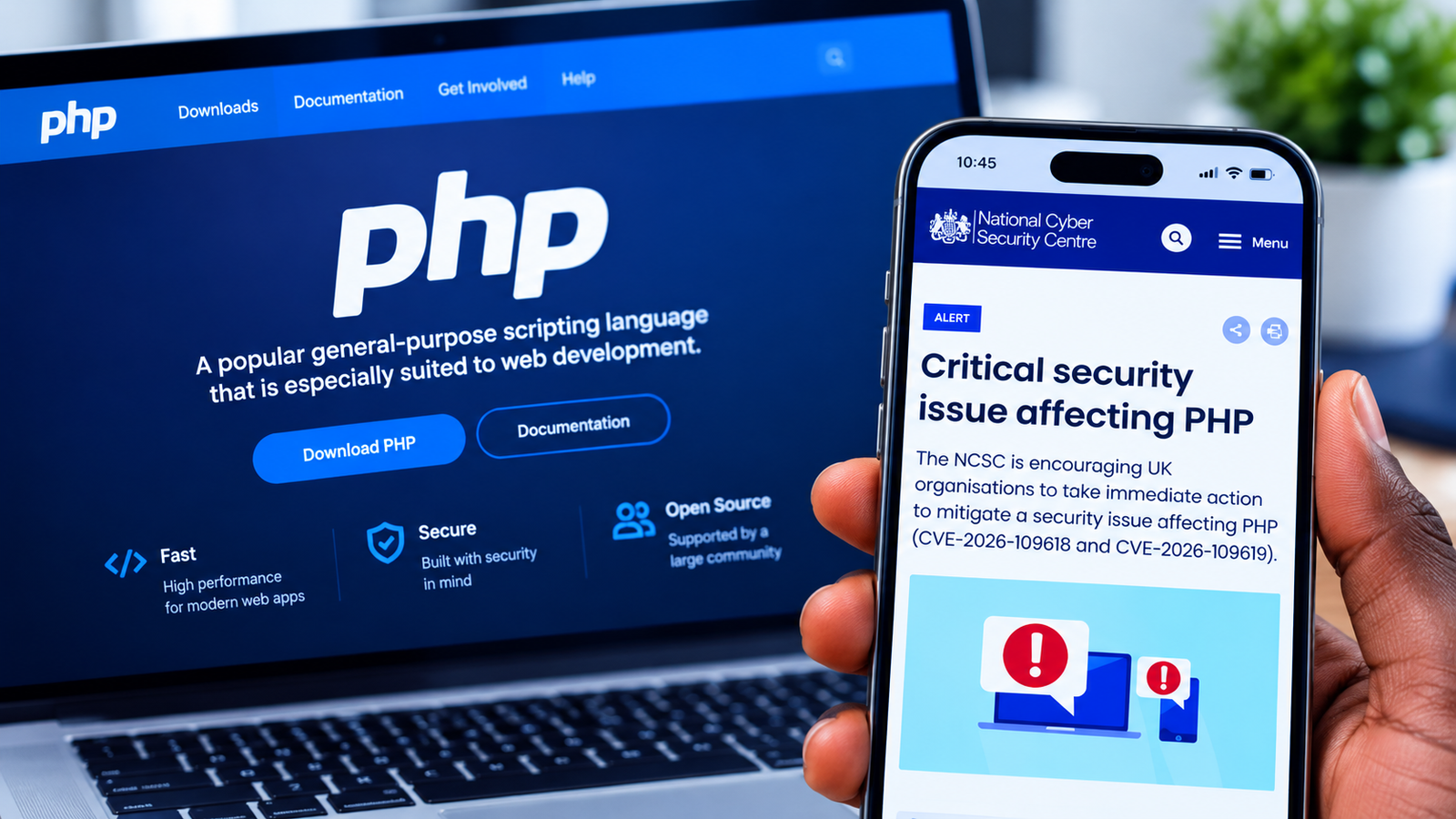
On October 21, 2026, the PHP development team released security updates for two critical vulnerabilities that could allow an attacker to execute code remotely without authentication. The vulnerabilities, identified as CVE-2026-109618 and CVE-2026-109619, affect PHP installations serving web requests.
What Happened?
PHP is one of the technologies used to run websites and web applications. When a serious weakness is discovered in PHP itself, the problem can potentially affect many websites that depend on vulnerable versions.
In this case, both vulnerabilities were rated 9.2 out of 10 under CVSS, making them critical security issues. Security researchers also demonstrated successful exploitation of the vulnerabilities.
You may have seen this incident referred to as PHP2Shell.
Why Should Website Owners Care?
You do not need to be a programmer to understand the risk.
Imagine your website as a building. Even if the doors and rooms inside are properly secured, a serious weakness in the building’s underlying structure can still create a way for an intruder to get inside.
That is why updating PHP matters.
An attacker exploiting a serious vulnerability could potentially gain unauthorized access, execute malicious code or interfere with systems running the affected software.
This can be particularly concerning for businesses that use websites to handle customer information, payments, accounts or internal business operations.
Which PHP Versions Were Affected?
The PHP security updates released on October 21 fixed the vulnerabilities in:
PHP 8.5.12
PHP 8.4.27
PHP 8.3.36
PHP 8.2.35
Older versions within those branches are affected. PHP 8.1 and older are also affected but are already end-of-life and no longer receive normal security updates.
PHP’s security team stated that updating is the only safe choice for this particular incident.
What Should Businesses Do?
If your website runs on PHP, do not assume that it is safe simply because the website is working normally.
Businesses should:
Check which PHP version their server is running.
Update to a supported and patched version.
Update frameworks, plugins and other software components.
Review server access and security settings.
Keep reliable backups.
Monitor websites for unusual activity.
If you are not responsible for managing the server yourself, ask your hosting provider or IT team to verify the PHP version and apply the required security updates.
The Bigger Lesson
This incident is a reminder that website security is an ongoing responsibility.
A website can look perfectly normal to visitors while running outdated software in the background. Regular maintenance, security updates and proper server management are therefore just as important as the website’s design and functionality.
At Ciphyr Digital Solutions, we help businesses with secure software development, website maintenance, IT support and system security.
Keeping your website updated may seem like a small technical task, but it can make a major difference when serious vulnerabilities are discovered.